Piscium

SOC & SecOps

Autonomous Threat Validation for SOC & Security Operations

Security operations teams need validated, contextual intelligence — not more alerts. Piscium autonomously validates exposures, enriches SIEM alerts with exploitation proof, and orchestrates remediation through your existing SOAR and ITSM stack — so analysts focus on what's real.

SIEM/SOAR native integration · Validated alert enrichment · Closed-loop remediation · 60% alert reduction

Why SOC Teams Are Drowning in Noise

The modern SOC processes thousands of events per hour, but most vulnerability findings lack the context analysts need to act. The result: alert fatigue, wasted cycles, and critical exposures that slip through the cracks.

Alert Fatigue Is a Force Multiplier — for Attackers

SOC analysts waste cycles investigating non-exploitable vulnerabilities because scanners can't distinguish theoretical risk from real-world danger. Every false positive is time not spent on genuine threats.

Fragmented Tooling, Siloed Data

SIEM, SOAR, vulnerability scanners, EDR, NDR — data lives in dozens of silos. Correlating findings across tools requires manual effort, tribal knowledge, and context that's rarely documented.

Slow Remediation Loops

Creating tickets, assigning owners across teams, tracking SLAs, negotiating change windows, and manually verifying that fixes worked — the remediation process eats analyst time and extends exposure windows.

No Proof of Exploitability

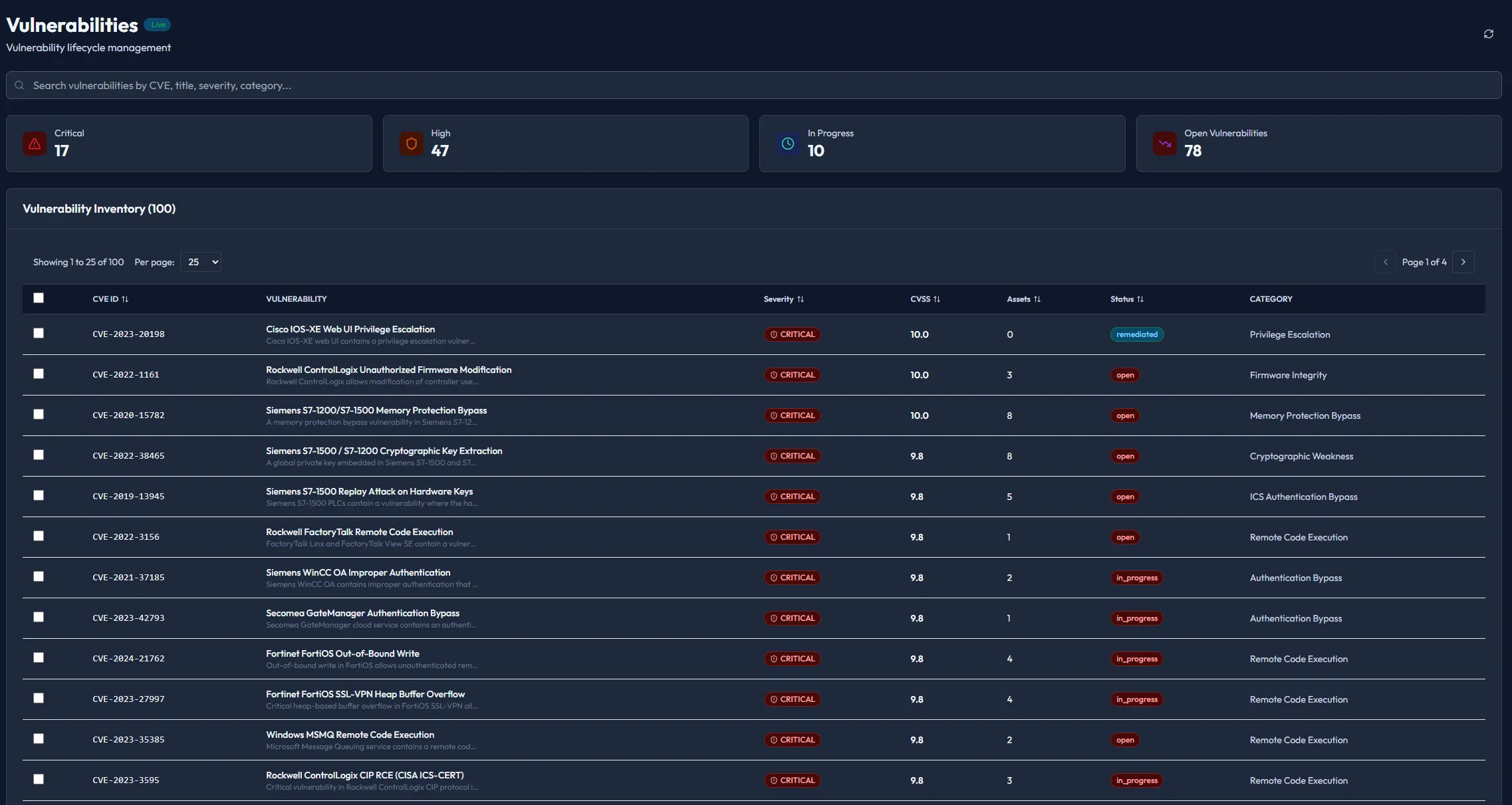
Vulnerability scanners report potential risk based on CVEs and version checks. SOC teams need evidence-backed proof that a finding is actually exploitable in their specific environment — not just a theoretical CVSS score.

Three Phases of Autonomous Threat Exposure Management

Piscium integrates into your SOC workflow to deliver validated, prioritized, and orchestrated threat exposure management — reducing noise and accelerating remediation.

Continuous Discovery That Feeds Your SOC

Piscium continuously discovers assets and exposures across your organization — feeding your SIEM with enriched, validated findings instead of raw vulnerability scan dumps. Your SOC gets a continuously updated threat landscape, not periodic CSV imports.

  • Continuous asset discovery feeds enriched data to your SIEM and CMDB
  • Correlation with existing vulnerability scanner findings (Qualys, Tenable, Rapid7)
  • Automatic deduplication and enrichment of findings from multiple scanning sources
  • New asset and exposure alerts pushed to SOC channels (Slack, Teams, PagerDuty)
Attacker-side continuous discovery: radar sweep scanning network nodesRadar dish with a sweep beam rotating over concentric rings, scanning network nodes that pulse when the beam passes. Represents continuous attacker-side discovery across cloud, on-prem, and OT environments.Continuous DiscoveryCloud · On-Prem · OT/ICS

Validated Prioritization — Not Just CVSS Scores

Every finding enriched with exploitation validation, attack path context, and business impact scoring. Your analysts see a prioritized queue of confirmed-exploitable findings — not thousands of theoretical vulnerabilities ranked by CVSS alone.

  • Exploitability-validated prioritization: only confirmed-exploitable findings reach your SOC queue
  • Attack path context: analysts see the full chain from entry point to critical asset, not isolated findings
  • Business impact scoring: revenue, data sensitivity, and operational impact factor into every priority
  • MITRE ATT&CK mapping: findings mapped to tactics and techniques for threat intelligence correlation
Prioritization by operational impact: attack path mapping and impact scoringStacked assets (cloud instance, server, PLC) connected by attack path segments with a target reticle overlay and an animated impact score badge showing operational risk scoring.CloudServerPLC0Impact ScorePrioritization by ImpactExploit chains · Operational risk · Work orchestration

Closed-Loop Validation and Remediation

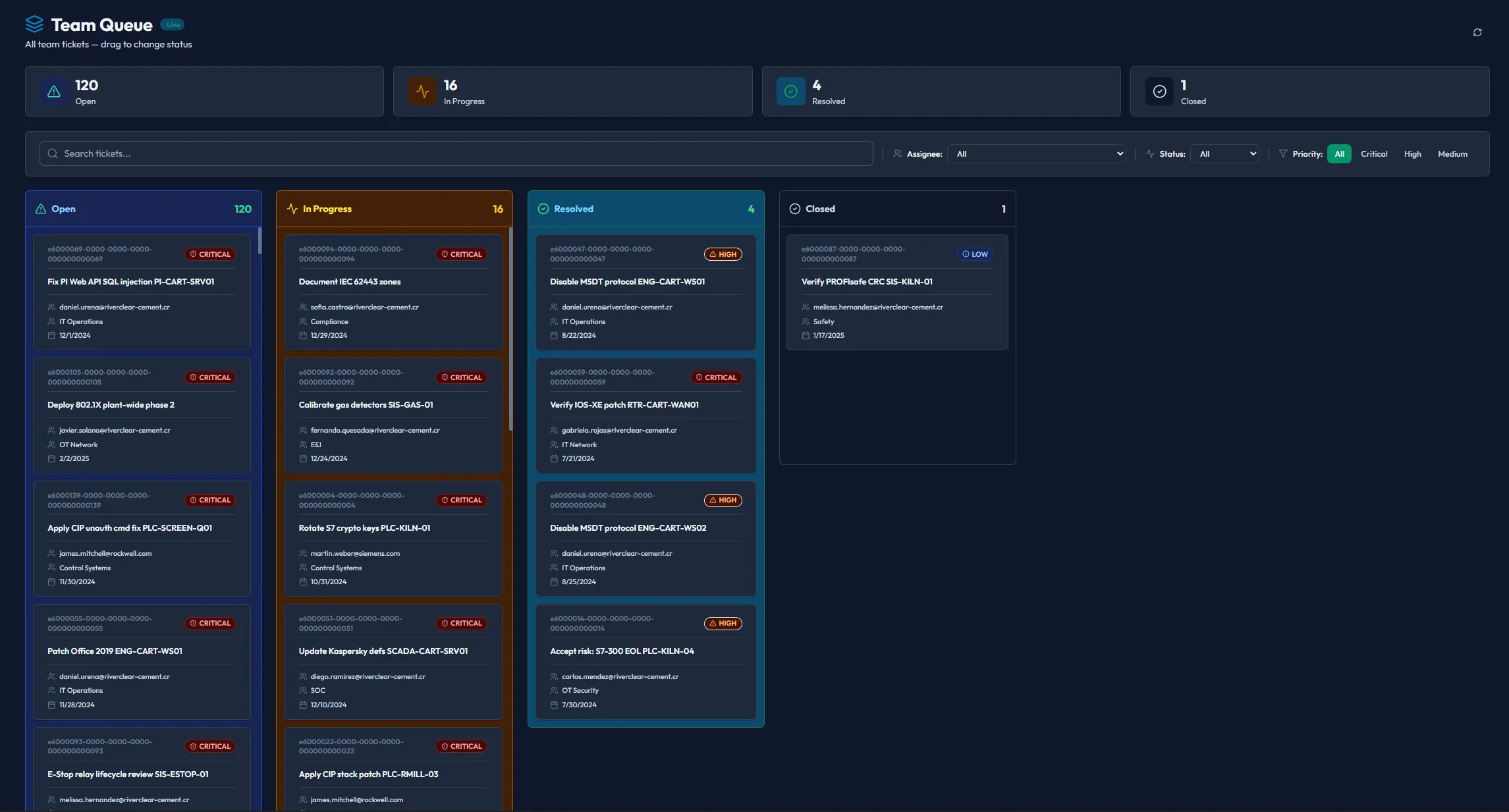
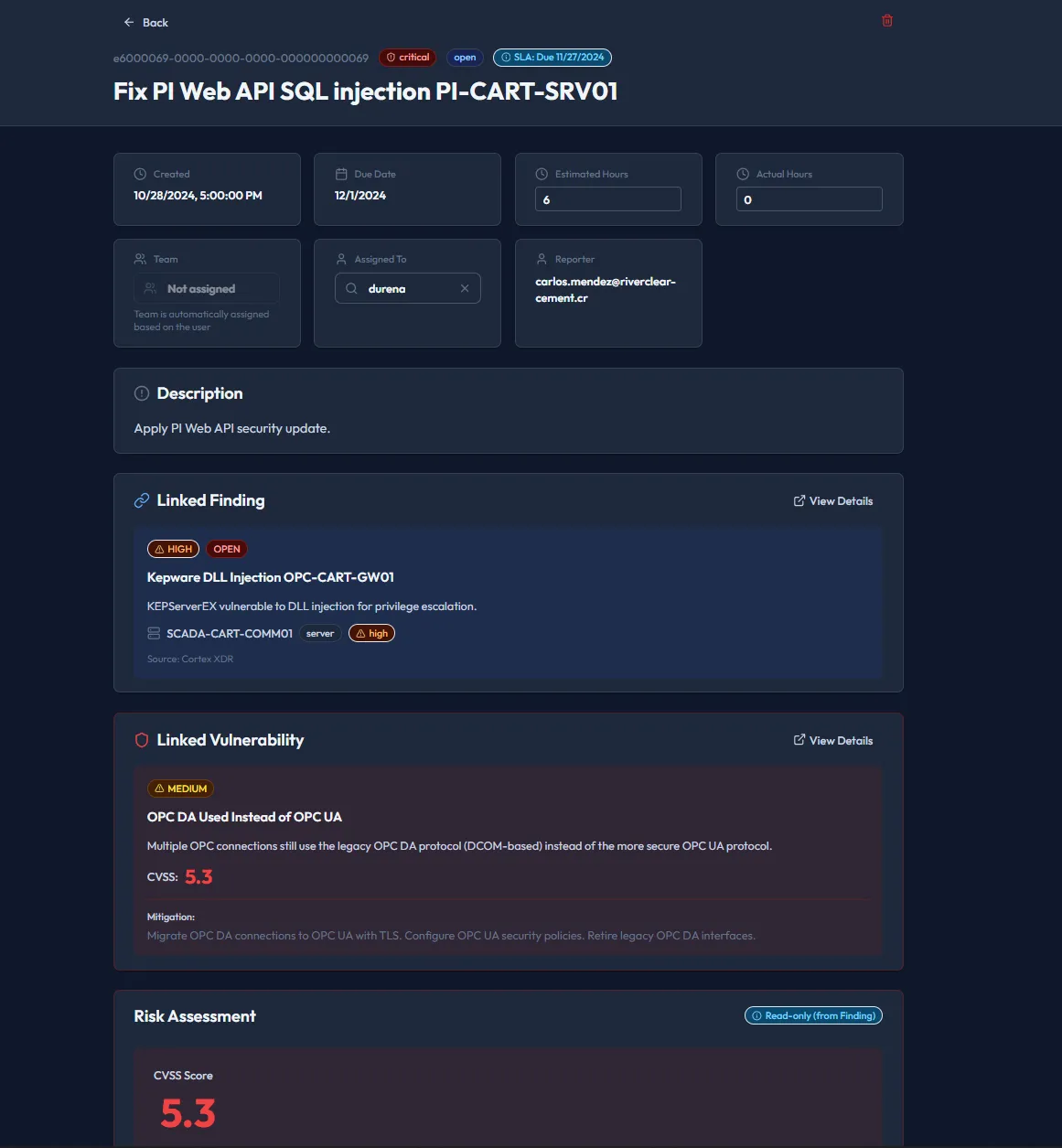
Piscium validates exploitability autonomously, triggers remediation workflows in your ITSM, and re-validates after fixes are applied — closing the loop without manual handoffs. Every step is logged, evidenced, and auditable.

  • Autonomous AI agents validate exploitability with evidence: screenshots, packet captures, audit trail
  • SOAR playbook triggers: validated findings automatically launch response playbooks
  • ITSM ticket creation with enriched context: attack path, validated proof, remediation guidance
  • Post-remediation re-validation confirms the fix works — no manual verification needed
Attack path validation: shield icon verifying security fixes with animated pulse ringsA shield icon with concentric pulse rings validates that attack paths are broken. Two path segments separate and a green check confirms remediation success.VerifiedContinuous ValidationAutomated re-tests · Evidence capture · Drift alerts

From Alert Noise to Validated Intelligence

Piscium transforms your SOC's signal-to-noise ratio. Before Piscium, your team processes thousands of unvalidated findings. After: a prioritized queue of confirmed-exploitable exposures with business context, exploitation proof, and automated remediation workflows. The result: dramatically fewer alerts, faster remediation, and evidence that your security program is actually reducing risk.

Proof of Action comparison: before and after remediation metricsSide-by-side before-and-after comparison of attack exposure metrics: attack paths reduced from 3200 to 47, risk score reduced from 23 to 91.BEFOREAttack Paths0Risk Score0AFTERAttack Paths0Risk Score0

Native Integration With Your SOC Stack

Piscium integrates natively with your SIEM, SOAR, ITSM, and communication platforms. Validated findings flow into your existing workflows — enriched with exploitation proof, attack path context, and remediation guidance. Your analysts work in tools they already know.

Platform architecture diagram showing connectors feeding into the CTEM engine and out to integrationsArchitecture diagram: connectors (Cloud, On-Prem, OT/ICS) on the left feed data into the central CTEM engine (Discover, Prioritize, Validate), which outputs to SIEM, ITSM, and Dashboard on the right.CONNECTORSCTEM ENGINEOUTPUTSCloudOn-PremOT / ICSDiscoverPrioritizeValidateSIEMITSMDashboard
SIEM integration: security information and event managementSignal waves icon representing SIEM integration.SIEM
ITSM integration: ticket and workflow managementTicket and workflow icon representing ITSM integration.ITSM
Cloud integration: cloud platform connectorsCloud icon representing cloud platform integrations.Cloud

SOC Compliance Evidence — Automated

Piscium maps validation activities, response actions, and remediation outcomes to the frameworks your SOC reports against. Continuous evidence replaces manual audit preparation.

MITRE ATT&CK

Adversary tactics, techniques, and procedures framework. Piscium maps every validated finding to ATT&CK techniques, enabling detection gap analysis.

NIST Cybersecurity Framework

Piscium maps SOC activities to Detect, Respond, and Recover functions with quantitative metrics — detection coverage, response times, and risk reduction rates.

ISO 27001

Piscium generates continuous evidence for incident management (A.16), security monitoring, and vulnerability management controls.

SOC 2 Type II

Piscium provides continuous monitoring evidence for security and availability trust services criteria — demonstrating effective SOC processes over time.

GDPR

Piscium supports data breach detection and response obligations by validating whether exposures could lead to personal data compromise.

PCI DSS

Piscium automates validation evidence for security monitoring (Req. 10), vulnerability management (Req. 6), and penetration testing (Req. 11) requirements.

Trusted by Security Operations Teams

  • SIEM and SOAR native integration — Splunk, Sentinel, XSOAR, QRadar, ServiceNow
  • 60% reduction in SOC alert volume through exploitability validation
  • Closed-loop remediation — from finding to fix to re-validation, fully automated
  • MITRE ATT&CK mapped — every finding correlated to tactics and techniques
  • Evidence-backed validation proof eliminates 'trust me' from vulnerability reports

Our SOC was processing 4,000+ vulnerability findings per week with no way to know which ones were actually exploitable. Piscium validated that fewer than 200 required action — and automated the remediation workflow for each one. Our analysts finally have time to hunt.

SOC Director, Global Technology Company

Supercharge Your SOC With Autonomous Validation

See how Piscium integrates with your SIEM, SOAR, and ITSM stack to deliver validated, prioritized, and orchestrated threat exposure management — so your analysts focus on what's real.

Frequently Asked Questions

How does Piscium integrate with our SIEM?
Piscium provides native API integrations with Splunk, Microsoft Sentinel, IBM QRadar, and other major SIEM platforms. Validated findings, attack path context, and remediation status are pushed as enriched events — supplementing your existing detection rules with exploitation proof.
Does Piscium replace our vulnerability scanner?
No. Piscium complements your existing scanners (Qualys, Tenable, Rapid7, etc.) by ingesting their findings and validating which ones are actually exploitable. Your scanners find potential vulnerabilities; Piscium proves which ones are real threats.
How much can Piscium reduce our alert volume?
Organizations typically see a 50-70% reduction in actionable findings after Piscium validates exploitability. The alerts that remain are confirmed-exploitable, business-context-scored, and enriched with attack path details — dramatically improving signal-to-noise ratio.
Can Piscium trigger automated response playbooks?
Yes. Piscium integrates with XSOAR, Splunk SOAR, ServiceNow Security Operations, and other SOAR platforms to trigger automated response playbooks when validated findings meet severity thresholds. Playbook data is enriched with exploitation proof and remediation guidance.
How does the closed-loop remediation workflow work?
When Piscium validates an exploitable finding: (1) it creates an enriched ticket in your ITSM, (2) assigns it based on asset ownership rules, (3) tracks SLA compliance, (4) after remediation is marked complete, autonomously re-validates that the fix eliminated the attack path, and (5) closes the ticket with evidence. No manual verification required.